

Understanding PVT Analysis in Reservoir Engineering: Why It Matters
Pressure-volume-temperature (PVT) analysis describes how reservoir fluids change phase and volume between the reservoir and the surface. Formation volume factors, […]
Pressure-volume-temperature (PVT) analysis describes how reservoir fluids change phase and volume between the reservoir and the surface. Formation volume factors, […]
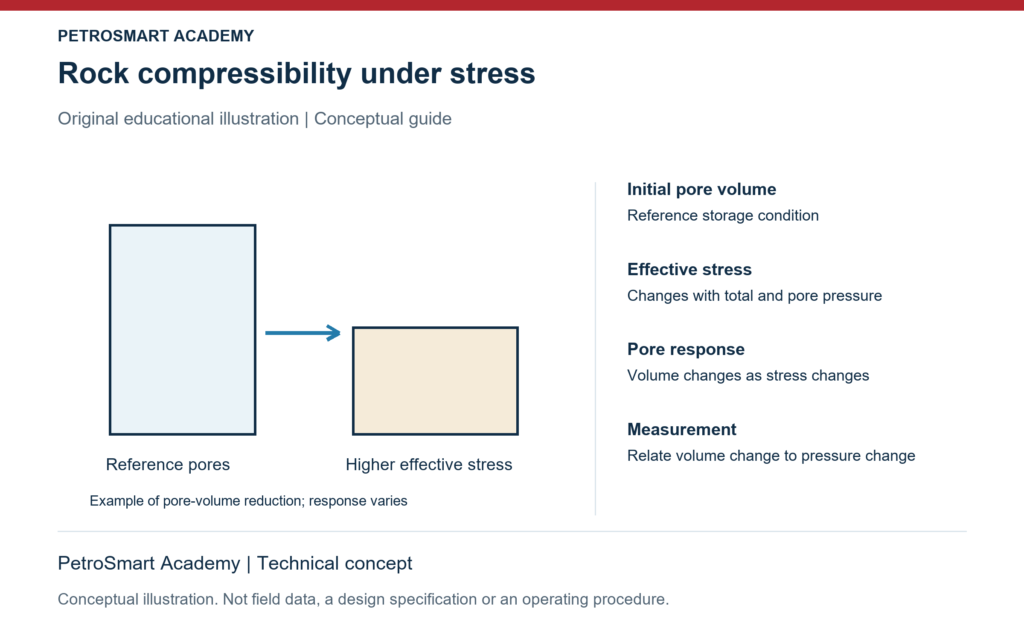
Rock compressibility, in reservoir engineering, usually means pore volume compressibility: the fractional change in pore volume per unit change in […]
The gas formation volume factor Bg converts a gas volume at standard conditions to its volume at reservoir pressure and […]
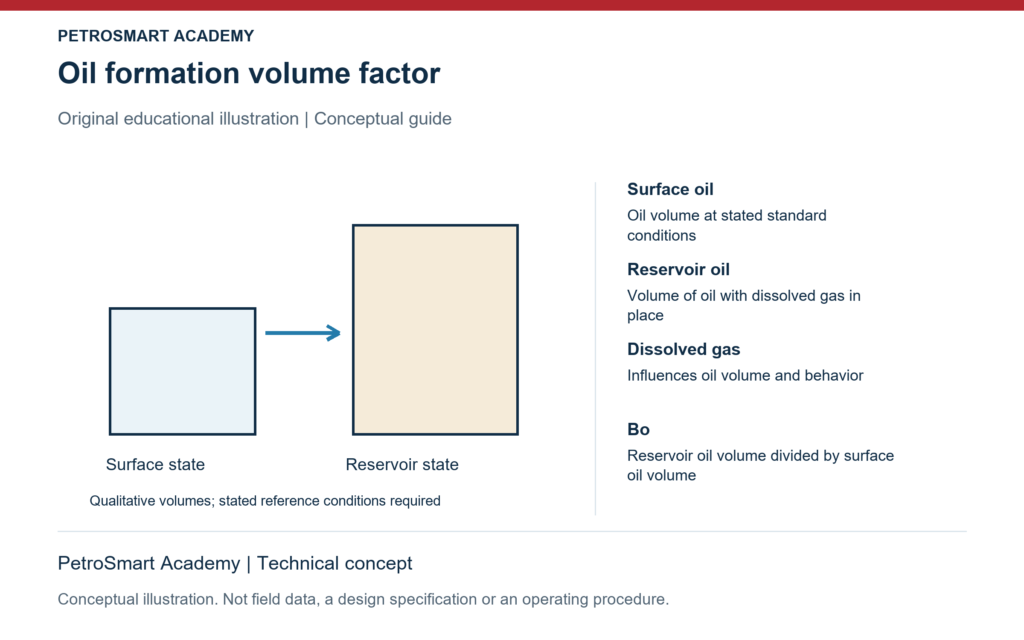
The oil formation volume factor Bo is the volume of oil, with its dissolved gas, at reservoir conditions divided by […]
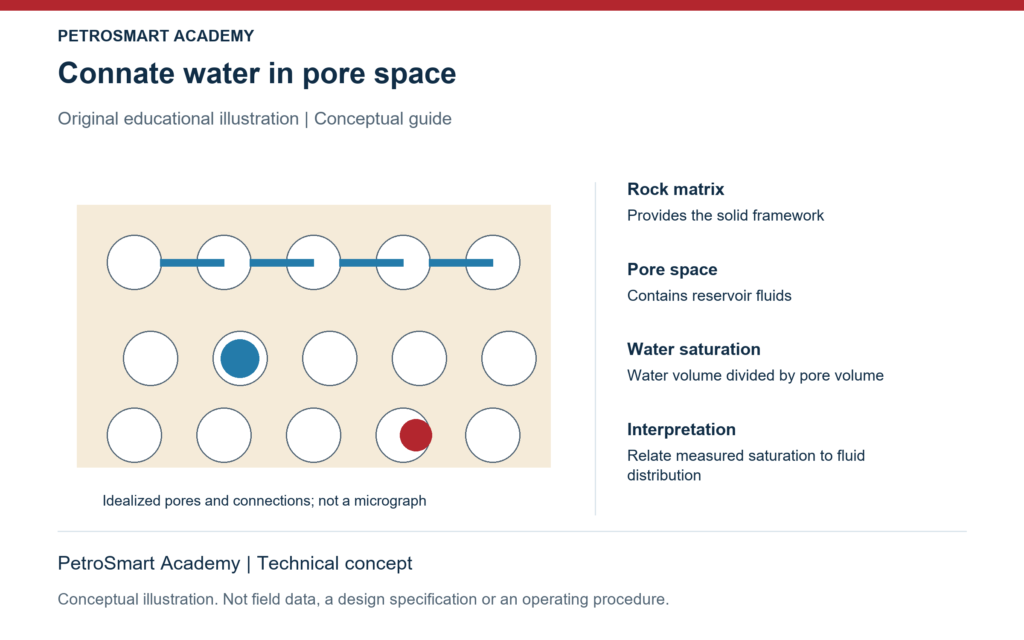
Quick answer. Connate water saturation describes the water present initially; irreducible water saturation describes a displacement endpoint. They need not […]
Water cut is the fraction of produced liquid that is water. It drives water handling cost and is one of […]

Quick answer. Producing GOR is the gas production rate divided by the oil production rate for the same period and […]
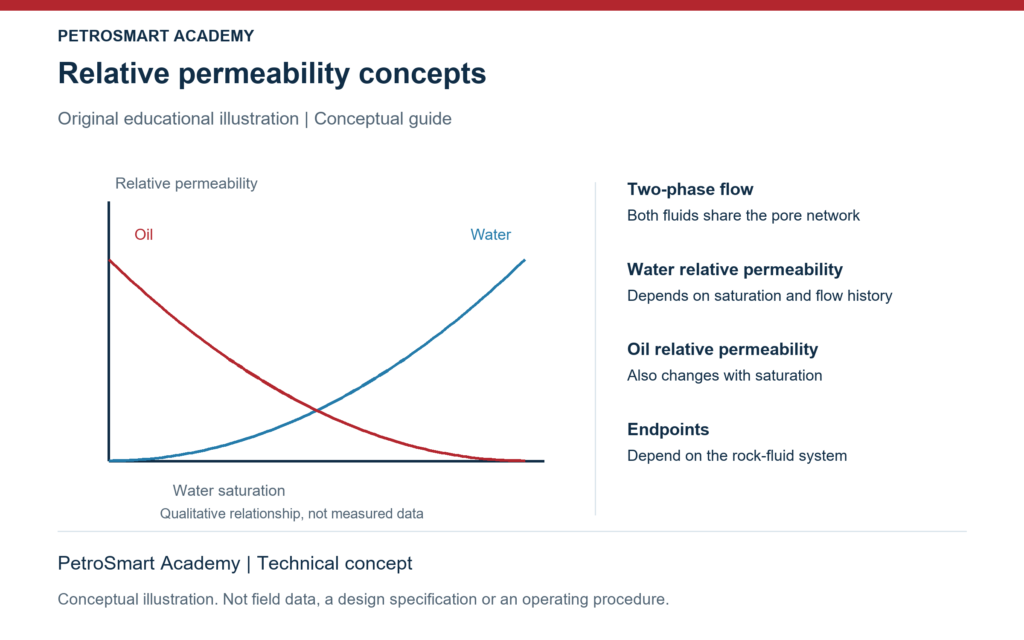
When oil, water and gas share the pore space, each phase flows through only part of it, and its effective […]
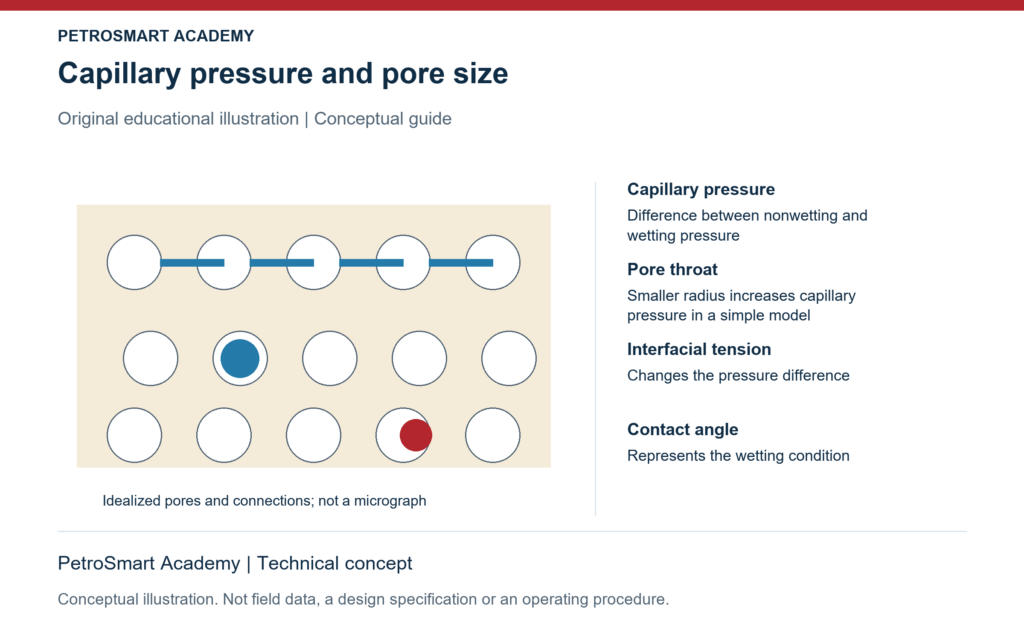
Capillary pressure curves are measured on core plugs, and the method chosen decides what the curve can be used for: […]
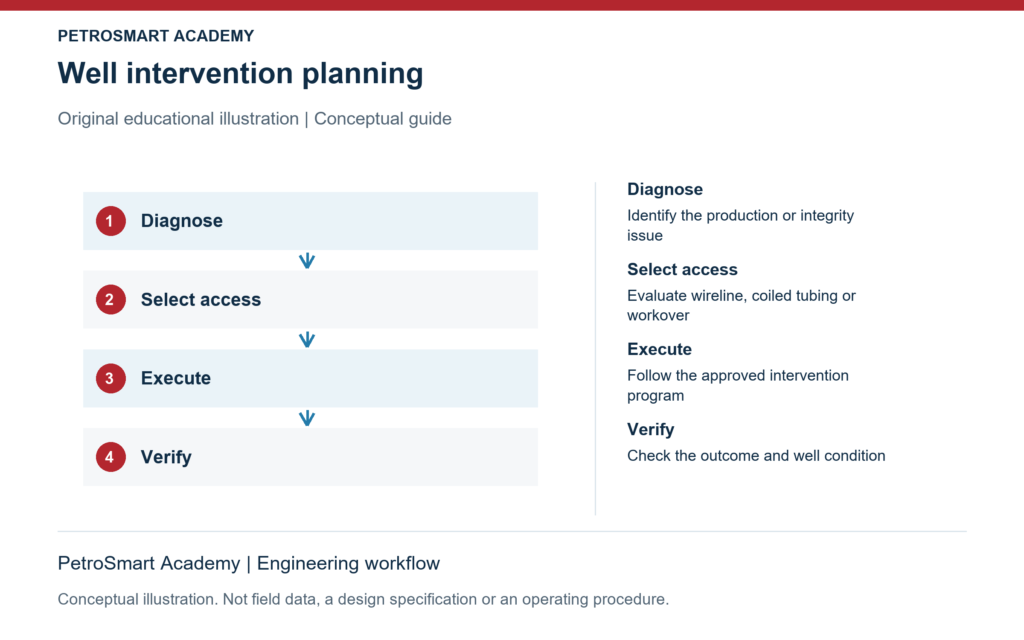
Well intervention covers the operations carried out in an existing well to diagnose problems, restore or increase production, change the […]